
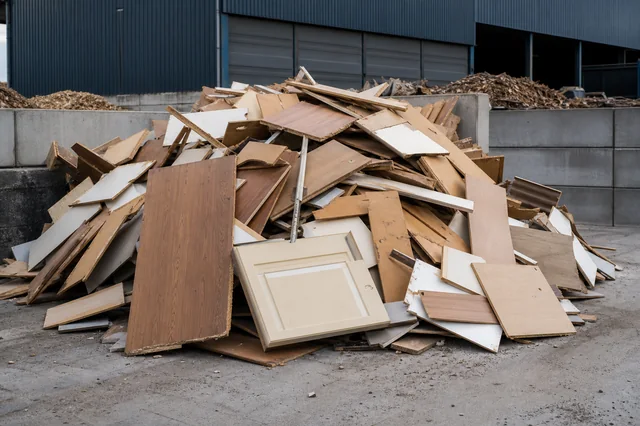
Furniture panels may be solid wood, particleboard, density board, or laminated composite panels, and adhesives and surface coatings vary widely. Whether the shredded wood chips can be used for boards, fuel or other directions needs to meet the recipient's standards first.
Material characteristics
- Pallets, furniture boards, construction lumber and garden branches vary widely in size, wood species, moisture content and metal attachments.
- Nails, corners, sand, plastics and coatings can affect wear, magnetic separation and the use of the finished product.
- Pelletizing, fuel, board raw materials and volume reduction external sales correspond to different wood chip particle size, fine powder and moisture content requirements.
Key processing challenges
- The distribution of screws, hinges and nails in the board is not fixed.
- The glue layer and coating will affect the ash content, odor and utilization boundary of the finished product.
- When the large plate is laid flat, it is easy to cross the hopper and needs to be pressed stably.
Equipment-selection criteria
- Determine the feed inlet, conveying and anti-bridging design based on the largest wooden parts, stacking method and forklift or gripper loading.
- Check the allowable boundaries of cutters, low-speed drives and metal parts containing nailed wood, and set appropriate magnetic separation positions.
- Secondary crushing, screening, iron removal, dust removal and storage solutions are deduced from the end use.
Typical process flow
The plates are first removed from the obvious hardware, and then screened after being conveyed, shredded at low speed and magnetically separated. If finer wood chips are needed, secondary crushing will be carried out after iron removal, and the use of coatings and adhesives will be evaluated.
Information required before project evaluation
Complete information helps us define equipment limits, test plans and the full line accurately:
- Waste wood types, sources and proportions of each type
- Maximum size, thickness, moisture content and stacking method
- Nails, sand, plastic and coating conditions
- Target chip sizes, fines and end uses
- Hourly throughput, shifts and loading methods
- Magnetic separation, dust removal, fire protection and storage conditions