
Lithium batteries can be hidden in cell phones, power tools, small appliances and energy storage devices. Batteries may heat up quickly when punctured, squeezed or internally short-circuited. Ordinary solid waste shredding lines do not have the safety conditions required for specialized battery processing.
Material characteristics
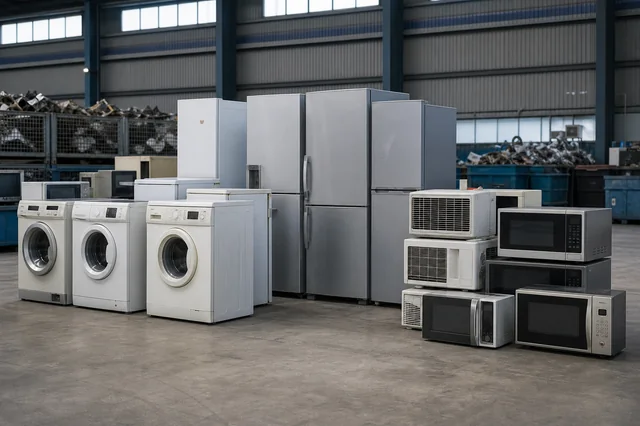
- Electronic waste contains metals, engineering plastics, cables and electronic components. The degree of disassembly determines the incoming material boundary of the crushing section.
- Batteries, live parts, compressors, seals and liquid-containing parts cannot be fed directly as ordinary solid waste.
- The crushing target should serve dissociation and sorting. Too fine particles may increase dust, metal loss and difficulty in sorting.
Key processing challenges
- The battery may be obscured by the casing and the incoming material identification may be incomplete.
- The remaining power and the damaged state are different, and the risk is difficult to judge based on the appearance.
- Smoke and re-ignition after a fire place special requirements on personnel, equipment and fire protection.
Equipment-selection criteria
- Establish procedures for disconnecting power, draining fluids, removing batteries, and identifying hazardous parts before discussing mechanical handling equipment.
- Determine primary volume reduction, secondary dissociation, magnetic separation, eddy current or specific gravity separation routes based on the target metal and plastic components.
- Check the tool wear resistance, temperature rise, dust and target component recovery effects through sample testing.
Typical process flow
Establish procedures for incoming material identification, battery removal and isolation storage. Batteries that do require mechanical processing should enter a specially designed and risk-assessed system. Ordinary e-waste lines only process components that have been safely disassembled.
Information required before project evaluation
Complete information helps us define equipment limits, test plans and the full line accurately:
- E-waste categories, sources and dismantling status
- Maximum dimensions, weight and main material composition
- Condition of batteries, liquids, refrigerants and hazardous parts
- Target recycled metal and plastic quality
- Fluctuations in throughput, shifts and incoming materials
- Dust collection, fire protection, electrical and local compliance requirements