
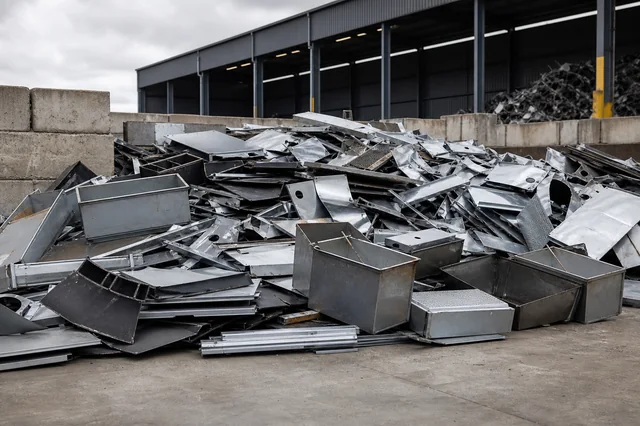
Light sheet metal, aluminum products and mixed metals containing plastics may all be classified as "scrap metal" in appearance, but their strength, thickness, form and impurity ratio determine completely different feed responses. Equipment parameters should serve the volume reduction, dissociation or sorting goals and cannot simply be copied from other projects.
Material characteristics
- Thin plates and hollow products have low packing densities, and their shapes change greatly after being compressed; thick and heavy parts bring higher impact and shear loads.
- Ferrous metals, aluminum, copper and non-metallic components such as plastics and rubber may be mixed.
- Strips, wires and strips have a tendency to become tangled, and closed containers and wetted parts also involve safety risks.
Key processing challenges
- Thin and light parts may slip or bridge in the hopper, and thick parts may exceed the bite range allowed by the tool.
- The hardness of metal foreign matter varies greatly, and it is necessary to clarify the boundaries that the equipment is allowed to handle and must be removed in advance.
- To obtain a sortable mixture, it is necessary to achieve component separation and control fines and dust.
Equipment-selection criteria
- Check the tool structure, shaft system and drive torque according to the maximum thickness, cross-section, unit weight and material grade.
- Determine the discharge size and whether to configure screening according to the purpose of briquetting, volume reduction, furnace front material or sorting material.
- Incorporate feeding requirements for magnetic separation, eddy current sorting or manual sorting into the entire line design.
Typical process flow
Projects typically begin with safety inspection and classification to eliminate closed containers, hazardous materials, and heavy items that exceed the boundaries of the equipment. After quantitative feeding and crushing, magnetic separation, screening and non-ferrous metal sorting can be set up in sequence. If the material contains a large amount of non-metals, sample testing is required to verify the dissociation particle size and recovery path of each component.
Information required before project evaluation
Complete information helps us define equipment limits, test plans and the full line accurately:
- Metal material, form and proportion of ferrous/non-ferrous metals
- Maximum dimensions, thickness, unit weight and packing density
- Impurities such as plastics, rubber, sediment and liquids
- Presence of airtight containers, wires and super hardware
- Target outfeed size, downstream sorting and finished product usage
- Processing capacity, feeding method, power and safety and environmental protection conditions